Product Description
Central b Venous Catheterization Simulator
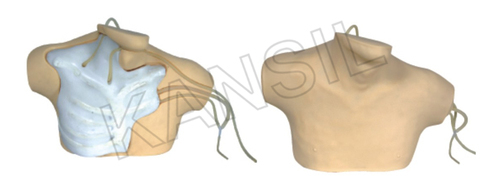
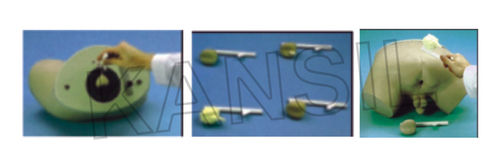
The cervicular veins are filled with red simulative blood for internal jugular vein and subclavical vein puncturing use.Squeeze bulb can simulate carotid artery pulse. With accurate anatomy, palpation is exactly the same as on a patient. Replacing of the internal tubing and skin is extremely easy.
Features:
- Cervical anatomical landmarks are quite clear and indicate structures of the sternal notch, clavicle, right cervical ribs, sternocleidomastoid and etc.
- Venous system in the deep part of left neck consists of commo carotid artery, internal jugular vein, external jugular vein, subclavical vein and brachioccephalic vein.
- Internal jugular vein puncture and cannulation can be exercised.
- Subclavical vein puncture and cannulation can be exercised.
- Carotid artery pulse can be simulated
- The skin and veins can be replaced and students will feel an apparent
- "POP" when the needle has been thrust into the vein.
- The heart floating swan-ganz intubation can be exercised.
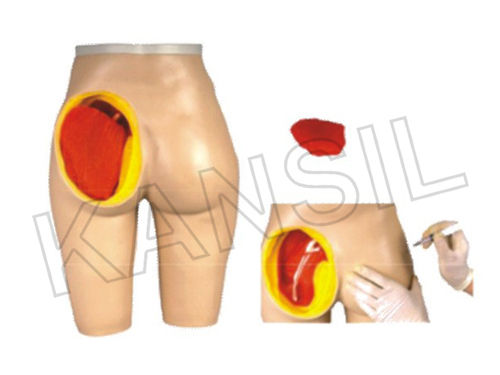
Simulate clinical scenarios with precision using this anatomically accurate adult torso model. The model replicates three major vascular access sites and provides tactile feedback for a realistic learning experience. Designed for repeated use, the interchangeable veins, blood reservoir system, and manual operation make it ideal for skill mastery in both classroom and clinical settings.
Enhanced Visual and Tactile FeedbackPalpable landmarks and a simulated blood flashback system allow learners to clearly identify successful venipuncture. The models compatible design supports ultrasound-guided access, closely mirroring real medical procedures and improving user proficiency and confidence.
Effortless Maintenance and PortabilityBuilt with high-grade PVC and silicone, the simulators veins are easy to flush and replace. Ready to use out of the box, this lightweight, portable model features integrated handles, allowing effortless transport and setup in diverse training environments.
FAQs of Central bVenous Catheterization Simulator Model:
Q: How is the Central Venous Catheterization Simulator Model used for training?
A: The model provides a hands-on experience by allowing trainees to perform percutaneous needle insertion, guide wire advancement, and catheter placement in replicated internal jugular, subclavian, and femoral veins. Visual feedback of venous return is provided through a simulated blood flashback system.
Q: What procedures can be practiced with this simulator?
A: This simulator supports practicing central venous catheterization, percutaneous needle insertion, guide wire and catheter placement, as well as ultrasound-guided vascular access, making it suitable for a wide array of vascular access training needs.
Q: When should I replace the interchangeable veins or artificial blood?
A: Replace the veins after repeated usage shows signs of wear or reduced resistance to needle puncture. Artificial blood should be refreshed when clarity diminishes or after extensive practice sessions to maintain realistic simulation.
Q: Where can this simulation model be effectively utilized?
A: It is ideal for use in medical schools, teaching hospitals, clinics, and simulation labs, supporting both individual and group skill development and competency certification.
Q: What is the maintenance process for this model?
A: To maintain the simulator, veins can be flushed with water after each session, and the interior surfaces can be wiped down with mild soap. Interchangeable veins allow for quick replacement, and the smooth surface makes cleaning straightforward.
Q: How does the model benefit medical trainees?
A: By providing life-size anatomy with palpable landmarks, simulated blood flow, and ultrasound compatibility, the model delivers a realistic, risk-free environment for mastering central venous catheter insertion, improving procedural accuracy and confidence.

 English
 Spanish
 French
 German
 Italian
 Chinese (Simplified)
 Japanese
 Korean
 Arabic
 Portuguese












 Send Inquiry